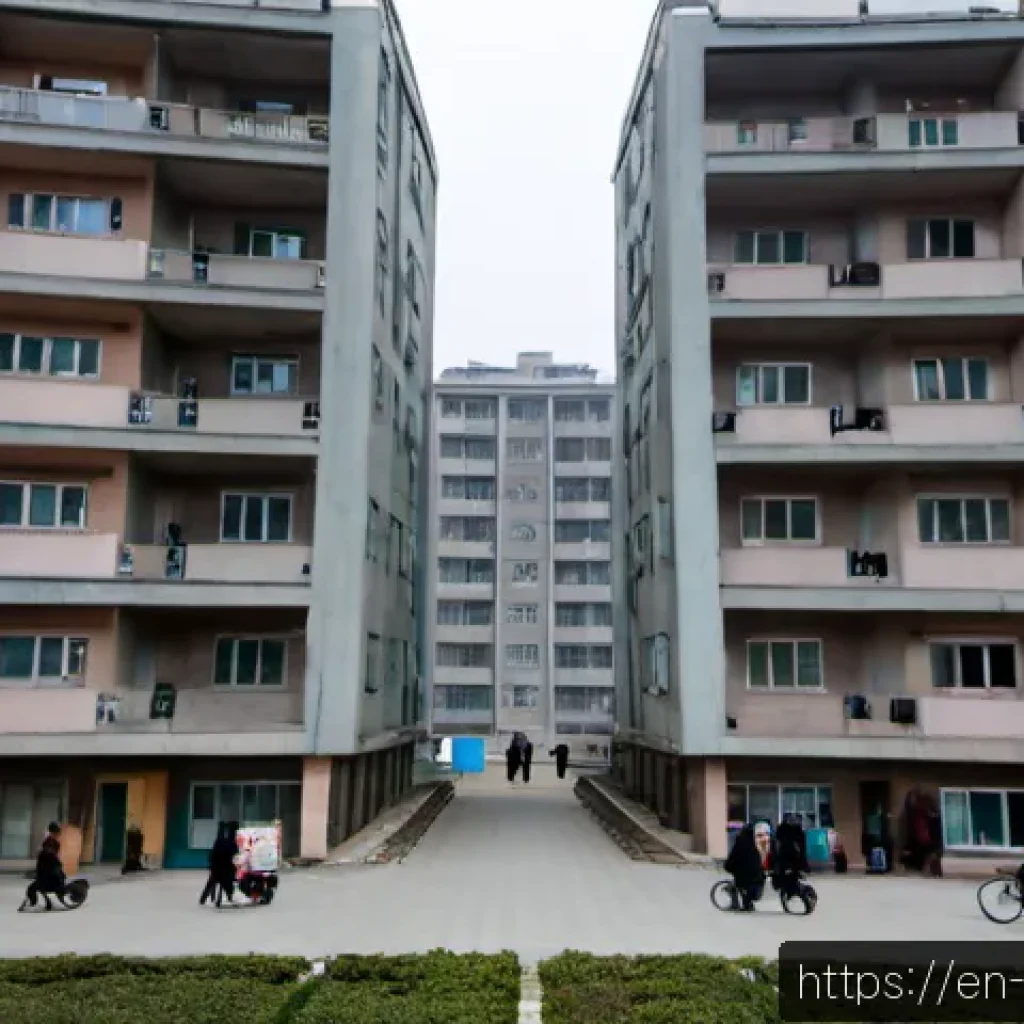
North Korean urban housing is commonly centered on apartment blocks allocated through state institutions, rather than a conventional private real-estate market.
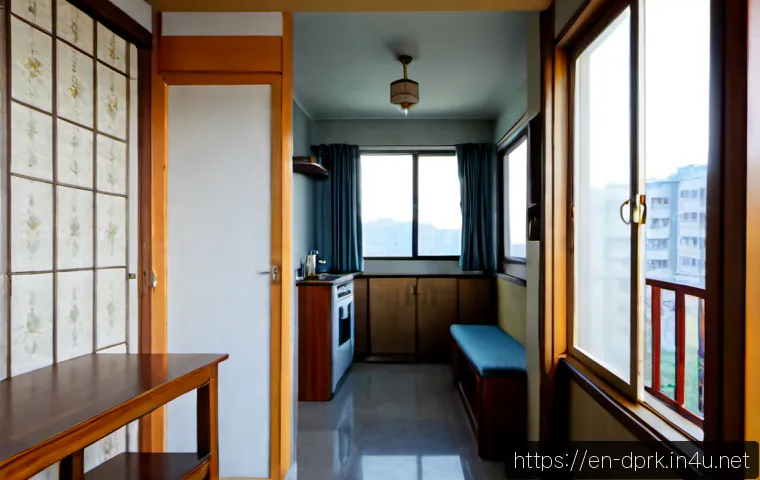
These buildings range from older low-rise and mid-rise blocks to newer high-rise developments in Pyongyang. Their construction, interior conditions, and access to utilities can differ sharply from one location to another.
A tower’s height alone does not indicate how reliable its water, heating, electricity, or elevator service will be. Housing also has a wider social role, since location and workplace connections can affect where a household is placed.
Looking at the building type and local context together offers a more careful picture.
How Urban Apartment Housing Is Organized
Apartment blocks are a major form of urban housing in North Korea, especially in Pyongyang and provincial cities. Historically, homes have been allocated through state institutions rather than obtained through a conventional private real-estate market. This means an apartment is best understood not only as a physical dwelling, but also as part of an administrative housing system.
The details of present-day allocation are not fully clear. Exact criteria may vary, and the role of informal buying, selling, or transfer arrangements in different cities requires confirmation. It is therefore safer not to treat any single account of housing assignment as a nationwide rule.
State allocation and household placement
State allocation has historically connected housing placement to institutions and households. Where a family lives may reflect more than the availability of a vacant unit. Workplace connections, city residence, and household status can all be relevant to how housing is organized, although the precise criteria used today are not publicly established in full.
This system also makes it difficult to compare apartments using the assumptions common in market-based housing systems. A building’s location and its relationship to local institutions may matter as much as its visible age or size.
Differences between Pyongyang and provincial cities
Pyongyang contains both older apartment districts and newer high-rise residential developments. Provincial cities also rely heavily on apartment housing, but building stock, infrastructure, and services may not match those of the capital. Conditions can differ substantially between cities and even between individual buildings in the same area.
For that reason, “a North Korean apartment” is not one uniform housing type. Broad descriptions are useful for understanding the system, but they should not be used to predict the condition of a particular home.
Common Building Types and Construction
Urban residential buildings include older low-rise and mid-rise blocks as well as more recent high-rise towers. Multi-story structures may be built with reinforced concrete or prefabricated concrete methods. These approaches support dense urban housing, but they do not by themselves reveal the present condition of a building or its services.
Older low-rise and mid-rise blocks
Older apartment districts commonly consist of lower or medium-height residential blocks. Their appearance, maintenance, and internal arrangements can vary. A lower building may depend mainly on stair access, while its utility service can still be shaped by the wider local infrastructure.
It is not possible to state a standard floor plan, room size, or occupancy level for these buildings across the country. Such details require building-specific or local verification.
Modern high-rise residential towers
Newer high-rise residential developments are a visible part of Pyongyang’s urban landscape. They represent a different scale of apartment construction from older blocks, with more floors and greater reliance on shared building systems. However, newer construction should not automatically be equated with identical living conditions across all towers.
Service reliability can vary by location and building. Electricity, heating, water, and elevator operation are practical issues that may affect daily life regardless of a building’s age or height.
| Building context | General characteristics | What requires caution |
|---|---|---|
| Older low-rise or mid-rise blocks | Common urban apartment form; may use concrete-based construction; stair access is often central to daily circulation. | Floor plans, occupancy, maintenance, and utility conditions are not uniform. |
| Newer Pyongyang high-rises | Large-scale residential towers within newer developments; elevators may be relevant to access. | Height and newness do not confirm reliable elevators, water, heating, or electricity. |
Inside a Typical Apartment Block
An apartment block is more than a collection of private units. Shared entrances, stairwells, and, in taller buildings, elevators connect households to the street and to building services. Yet there is no confirmed nationwide “typical” interior layout. Room counts, unit size, and the number of occupants can differ and should not be generalized without direct evidence.
Shared entrances, stairwells, and elevators
Shared entrances and stairwells are basic features of multi-household buildings. Elevators may be present in taller structures, particularly high-rises, but their existence and dependable operation are separate questions. Elevator service can vary between buildings and locations.
As a result, it would be inaccurate to say that most North Korean apartment buildings either do or do not have working elevators. The answer depends on the height, location, and current condition of the individual building.
Utilities, heating, and water access
Electricity, heating, water, and elevator service are among the most important factors shaping everyday residential life. Reliable access to each can vary. A household’s experience may therefore depend on local systems as well as the building in which it lives.
Building-level claims need particular care because current utility conditions can change and are not known in detail for every location. Reports about one district should not be treated as a full national picture.
Housing Status and Everyday Life
Housing location can have practical and social significance. In an allocation-based setting, placement may be connected to workplace relationships and household status, not simply personal choice in a housing market. Living near an institution or place of work can shape routines, access, and the character of a neighborhood.
Location, workplace connections, and social status
Pyongyang’s mix of established apartment districts and newer towers shows that urban housing can also carry symbolic weight. Still, the exact relationship between a household’s status and a specific apartment assignment is not fully documented. It is more accurate to recognize that location and institutional connections may matter than to assign fixed rankings to every district or building type.
Everyday life inside these buildings is shaped by ordinary concerns: getting in and out of the building, using shared areas, and managing electricity, heating, and water when service is variable.
Limits of Available Information
Information about North Korean residential buildings is uneven. Broad patterns are clear: apartment blocks are central to urban housing, state allocation has historically been important, and Pyongyang includes both older districts and newer high-rises. But building-by-building comparisons are much less certain.
Why building-level comparisons require caution
There is no confirmed national standard for apartment size, floor plans, occupancy, or current utility reliability. The condition of an individual building may differ from nearby structures, and the present rules for household allocation require confirmation. Claims about private transactions or informal transfers also need to be handled carefully because their extent may vary by city.
A careful description should distinguish between known structural patterns and details that remain uncertain. This avoids turning limited information into sweeping conclusions about the homes of millions of urban residents.
Closing Thoughts
North Korean apartment housing is best viewed as a varied urban system rather than a single building model. Older blocks, mid-rise buildings, and newer Pyongyang towers can all be part of that system. Construction methods and building height offer only part of the picture. The reliability of utilities, elevator service, and the details of household placement must be assessed with attention to location and current conditions.
Useful Points to Know
Apartment blocks are a major urban housing form.
Housing has historically been allocated through state institutions.
Pyongyang combines older apartment districts with newer high-rise development.
Utilities and elevator service can vary by building and location.
Key Takeaways
North Korean urban apartments range from older concrete-based blocks to newer high-rise towers, but no single layout or living standard applies nationwide. Housing placement has historically been state-led, while current building conditions and allocation details require case-by-case confirmation.
Frequently Asked Questions
Q1. What are North Korean apartment buildings usually made of?
A1. Multi-story residential buildings may use reinforced concrete or prefabricated concrete construction methods. The materials and condition of any individual building can vary.
Q2. Do most apartment buildings in North Korea have elevators?
A2. Elevators may be used in taller residential buildings, but there is no reliable nationwide basis for saying that most apartment buildings have them. Even where elevators are installed, service reliability can vary by building and location.
Q3. How are apartments assigned to North Korean residents?
A3. Housing has historically been allocated through state institutions rather than a conventional private real-estate market. Household placement may be connected to institutional and workplace factors, but the exact criteria used today require confirmation.