Hey there, fashion explorers and culture enthusiasts! When we think of Hanbok, that incredibly beautiful traditional Korean attire, our minds often jump straight to Seoul’s vibrant palaces or K-dramas.
But did you know there’s another fascinating side to its story, one woven into the very fabric of North Korean identity? I recently dove deep into the world of what they call “Choson-ot,” and what I discovered was truly captivating.
It’s a journey through time, revealing how a shared heritage evolved along its own unique path, reflecting different aesthetics and societal influences.
From its ancient origins to its distinctive modern-day flourishes, the design and transformation of North Korean Hanbok hold a unique charm that’s simply begging to be explored.
Let’s uncover this captivating evolution together!
Tracing the Threads: From Ancient Roots to Modern Silhouettes
Diving into the history of Choson-ot, what we often call North Korean Hanbok, felt like a real journey through time, uncovering layers of tradition and adaptation. It’s fascinating because, at its heart, it shares so much with the Hanbok we see in South Korea – both drawing from ancient Korean clothing styles that have graced the peninsula for centuries. Think back to the Goguryeo murals or Silla artifacts; you can spot the unmistakable origins of the jeogori (jacket), chima (skirt), and baji (trousers) that form the foundation of this beautiful attire. What truly captivated me was seeing how a common root could branch out so distinctly. When I first started researching, I expected more similarities, but the deeper I delved, the more I realized that while the foundational elements are shared, the stylistic choices and underlying philosophies began to diverge quite early on. It wasn’t just about political separation, but about different cultural and aesthetic priorities shaping the same basic garments. It’s a testament to how fashion, even traditional fashion, is a living, breathing entity, constantly evolving and absorbing the influences around it. I found myself thinking, “Wow, even ancient clothing tells such a complex story!”
Echoes of History: The Shared Heritage
When you look at the fundamental components of Choson-ot, it’s impossible not to acknowledge the deep historical ties it has with the broader Korean sartorial tradition. The basic structure—a short jacket paired with a full skirt for women, and trousers with a jacket for men—has been a cornerstone of Korean dress for well over a thousand years. From the three kingdoms period to the Joseon Dynasty, these silhouettes were consistently refined and adapted. I often imagine the artisans and tailors of old, meticulously hand-stitching garments that were both functional and symbolic, each fold and stitch carrying the weight of cultural identity. This shared legacy is something I find incredibly moving, reminding us that despite modern divisions, a profound historical connection endures in the very fabric of their clothing. It truly highlights how deeply ingrained these styles are in the Korean psyche, whether north or south.
Diverging Paths: Early Influences on Northern Style
Despite the shared heritage, the path taken by Choson-ot started to subtly diverge much earlier than one might assume. While both sides of the peninsula embraced the beauty of Hanbok, geographical and political influences throughout history, even pre-division, played a role. I’ve read fascinating accounts suggesting that certain regional styles and preferences in the northern parts of Korea, perhaps influenced by neighboring cultures or distinct local resources, began to shape a slightly different aesthetic. Post-division, these differences became more pronounced, as North Korea deliberately fostered a unique national identity through its cultural output, including clothing. It wasn’t just about preserving tradition; it was about reinterpreting it through a specific ideological lens. This intentional cultivation led to a fascinating evolution, where elements might appear similar at a glance, but upon closer inspection, reveal a distinctly northern character. It’s like two branches from the same tree, growing towards different sunlight.
Beyond the K-Drama Glamour: The Unique Aesthetics of Choson-ot
If your only exposure to Hanbok is through vibrant K-dramas with their incredibly elaborate and often historically romanticized costumes, then preparing yourself for the aesthetics of Choson-ot is a must. My first impression was a striking sense of understated elegance. While South Korean Hanbok often celebrates a riot of rich colors, intricate patterns, and sometimes lavish embroidery, I observed that Choson-ot tends towards a more subdued, yet still deeply beautiful, palette. It’s not about being less elaborate, but rather about a different kind of elaboration. The beauty often lies in the quality of the fabric, the subtle interplay of complementary hues, and a focus on graceful, clean lines rather than overt ornamentation. It really made me reconsider what “glamour” means in traditional attire; here, it felt less about overt display and more about quiet dignity and a sense of collective identity. I remember seeing images of everyday Choson-ot, and being struck by how practical and yet undeniably graceful they looked, perfectly blending function with a profound sense of cultural pride. It’s a completely different vibe, and I have to say, it’s just as captivating in its own way.
Color Palettes and Fabric Choices: A Distinct Northern Hue
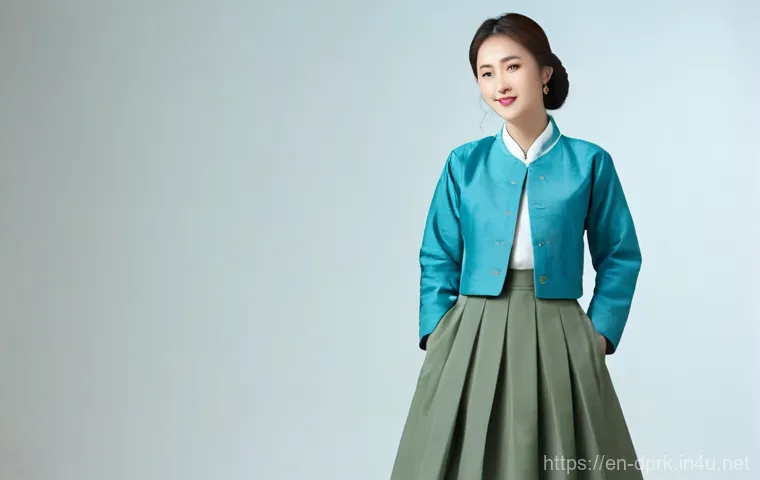
One of the most immediate differences I picked up on was the predominant color schemes. While bright, primary colors and elaborate gold or silver accents are common in South Korean Hanbok, Choson-ot often leans into a more harmonious, often pastel or earthy range of colors. Think soft blues, muted greens, deep burgundies, and subtle grays, often paired in gentle contrasts. The fabrics, from what I could gather, also tend to emphasize durability and comfort, though luxurious silks and satins are certainly reserved for special occasions. It’s a pragmatic beauty, reflecting perhaps a national ethos that values utility alongside aesthetics. This doesn’t mean it’s dull; quite the opposite! The thoughtful combination of these hues creates a sophisticated and often ethereal look that is uniquely appealing. I personally find the subtlety incredibly chic, as it allows the wearer’s grace to shine through without being overwhelmed by excessive adornment. It’s a quiet confidence woven into the very threads.
The Modesty and Grace of Northern Silhouettes
The silhouette of Choson-ot also presents a fascinating contrast. While contemporary South Korean Hanbok sometimes experiments with shorter jeogori (jackets) and fuller skirts that emphasize a more modern, playful aesthetic, Choson-ot typically maintains a slightly longer, more modest jeogori, and skirts that fall with an elegant, less voluminous drape. The overall effect is one of refined grace and composure. There’s a subtle emphasis on covering the body in a way that is both respectful and flattering, creating lines that are long and flowing. When I compare them, I don’t see one as ‘better’ than the other, but rather as expressions of different cultural values. The Choson-ot silhouette, to me, evokes a sense of timeless dignity and a deep respect for tradition, a kind of beauty that feels both ancient and eternally relevant. It’s about movement and posture, allowing the fabric to flow around the wearer rather than being strictly tailored.
Fashioning Ideals: How Politics Shaped North Korean Attire
It’s impossible to discuss the evolution of Choson-ot without acknowledging the profound impact of political ideology. Clothing, in North Korea, is never just clothing; it’s a powerful tool for expressing national identity, unity, and adherence to state ideals. I found it utterly compelling to trace how the “hanbok for the people” became “Choson-ot for the nation.” Under leaders like Kim Il Sung and Kim Jong Il, there was a deliberate effort to standardize traditional attire, to make it accessible to all citizens, and to imbue it with revolutionary meaning. This wasn’t about stifling creativity entirely, but rather channeling it towards a collective aesthetic that championed modesty, practicality, and a sense of shared purpose. When I looked at historical photos, I could clearly see the shift from more diverse regional styles to a more unified national look, reflecting the desire for a cohesive society. It really got me thinking about how much our clothes, even in our own societies, subtly reflect the values we uphold, whether consciously or not. In North Korea, this reflection is far more deliberate and central to identity, a constant reminder of shared national goals. It’s truly a fascinating lens through which to view societal priorities.
Revolutionary Chic: Hanbok as a Symbol of State
From the early days of its establishment, North Korea utilized Choson-ot as a potent symbol of its unique socialist identity and revolutionary spirit. It was presented not just as traditional dress, but as the dress of a new, proud, and independent nation. Leaders and citizens alike were often depicted wearing Choson-ot, especially on important national holidays and political events, cementing its role as a visual representation of state power and national unity. This approach stood in stark contrast to the West’s emphasis on rapidly changing fashion trends, as Choson-ot offered a sense of stability and timelessness, rejecting what was perceived as frivolous capitalist consumerism. I even came across images of women in Choson-ot participating in parades and rallies, carrying flags – a visual merger of tradition and revolutionary fervor that is incredibly striking. It makes you realize how deeply intertwined fashion and politics can become, especially when building a new national narrative from the ground up.
Practicality Meets Patriotism: The Evolution of Everyday Wear
Beyond its symbolic weight, the design of everyday Choson-ot also evolved to meet practical needs, while still embodying patriotic sentiments. While special occasion Choson-ot retained more elaborate elements, daily wear often prioritized comfort, durability, and ease of movement, especially for working women. I noticed that materials like cotton and other sturdy fabrics became more common, and designs were adapted to be less cumbersome for daily tasks. This wasn’t just about functionality; it was about presenting an image of a diligent, hardworking populace proud to contribute to the nation. It’s a brilliant fusion of utility and ideology, where even the fabric choices and cut of a sleeve could subtly reinforce national values. This emphasis on practicality, combined with a dignified aesthetic, gave everyday Choson-ot a unique character that is both grounded and aspirational. I often ponder how fashion in our own lives balances these same needs, albeit with less overt political messaging.
A Stitch in Time: Everyday Wear vs. Festive Finery
Just like any traditional attire globally, Choson-ot has distinct variations for daily life and for those grand, celebratory moments. This distinction fascinated me because it really highlights the versatility of the garment and how it adapts to different facets of life. When I first started researching, I sometimes saw images that seemed quite plain, and then others that were absolutely breathtakingly rich. It took a while to understand that these weren’t necessarily different “types” of Hanbok, but rather different applications of Choson-ot for various occasions. Imagine your own wardrobe; you wouldn’t wear a ball gown to go grocery shopping, right? It’s the same principle here, but with a deeper cultural resonance. The beauty lies in how the core elements remain, yet the embellishments, fabrics, and even the way it’s worn can transform it from functional daily wear to magnificent festive attire. I truly appreciate how this duality speaks to the balance between the mundane and the momentous in human experience, beautifully captured in clothing. It’s a testament to how traditional dress isn’t static but dynamically serves the rhythms of life.
Daily Life Attire: Comfort and Functionality
For everyday wear, the focus of Choson-ot naturally shifts towards comfort, practicality, and ease of movement. I observed that women typically wear less elaborate versions, often made from sturdy, breathable fabrics like cotton or simpler synthetic blends. The colors tend to be more muted, and patterns are either absent or very subtle, such as delicate stripes or small, geometric motifs. The jeogori might be slightly longer, and the chima designed for mobility, perhaps a little less full to prevent tripping during household chores or daily activities. It’s a testament to the ingenuity of traditional design that it can be so readily adapted for the demands of daily life without losing its inherent elegance. I personally value comfort in my own daily wear, so I can totally appreciate how Choson-ot achieves this while still maintaining a strong sense of cultural identity and dignity. It’s functional fashion at its finest, proving that tradition can be both beautiful and utterly practical.
Celebrating in Style: Special Occasion Choson-ot
Ah, but for festivals, weddings, and other significant occasions, Choson-ot truly comes alive! This is where you see a burst of richer fabrics like silk and satin, often in more vibrant, yet still harmoniously balanced, color combinations. Elaborate embroidery, often featuring auspicious symbols like cranes, peonies, or phoenixes, adorns the jeogori, chima, and even sleeves. The overall cut might be grander, with a fuller skirt that creates a more majestic silhouette. I was particularly struck by the intricate details in the embroidery; it’s clear that these are not just clothes, but works of art, each stitch telling a story or conveying a wish for good fortune. Wearing such an outfit must truly make one feel like royalty, embodying centuries of tradition and beauty. It’s a dazzling display of craftsmanship and cultural pride, a far cry from the utilitarian daily wear, but equally significant in its own right. I can only imagine the feeling of donning such a magnificent ensemble for a special day.
The Art of Adornment: Decoding Choson-ot Accessories
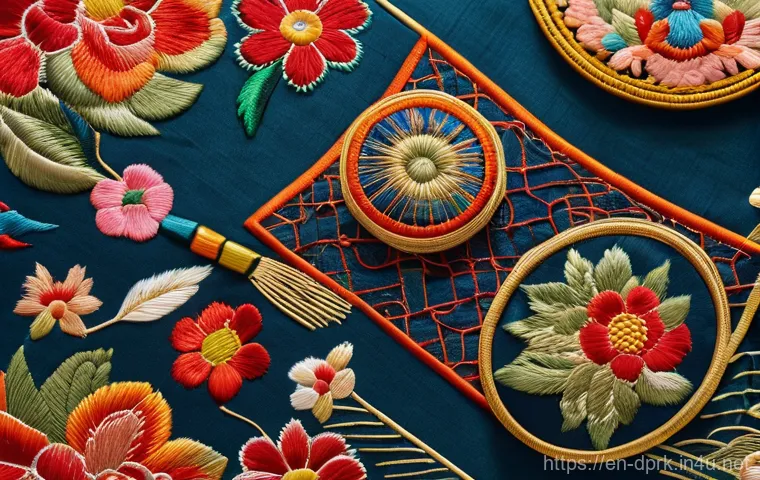
Beyond the main garments, the accessories that accompany Choson-ot tell their own fascinating story, acting as subtle embellishments that complete the traditional look. It’s often in these smaller details that you find a deeper connection to cultural nuances and personal expression, even within a more standardized aesthetic. I’ve always found accessories to be the true personality markers in fashion, and Choson-ot is no exception. While perhaps not as overtly flamboyant as some accessory traditions, the beauty lies in their understated elegance and symbolic meaning. From the delicate hairpins that secure an elaborate coiffure to the carefully chosen norigae (ornamental pendants) that dangle from the jeogori, each piece plays a vital role. These aren’t just afterthoughts; they are integral components that enhance the overall harmony of the attire, often carrying generations of tradition and craftsmanship within their intricate designs. It really makes you appreciate how every element of traditional dress is thoughtfully considered and contributes to the complete picture. It’s like finding hidden treasures in plain sight!
Hairpins, Ribbons, and Headwear: Subtle Statements
The way hair is styled and adorned with Choson-ot is a beautiful art form in itself. While modern hairstyles are common, for traditional occasions, women often wear their hair in an elaborate bun, secured with elegant hairpins (binyeo). These pins can range from simple functional pieces to highly decorative ones crafted from jade, silver, or even gold, sometimes featuring intricate carvings of flowers or birds. Additionally, colorful ribbons might be woven into the hair or used to secure braids, adding a touch of vibrancy. For specific events, or as part of a uniform, various forms of headwear might also be incorporated, though these are typically less common in general use. I’ve noticed how these subtle additions, far from being purely ornamental, contribute significantly to the overall dignified and graceful appearance of the wearer. They frame the face beautifully and add an extra layer of traditional charm that is truly captivating. It’s amazing how something as small as a hairpin can carry so much cultural weight.
Embellishments and Embroidery: Telling a Story
The true artistry in Choson-ot often shines through its embellishments and embroidery. While the overall aesthetic might lean towards modesty, the details can be incredibly rich and meaningful. Traditional embroidery, meticulously hand-stitched, often features symbolic motifs such as chrysanthemums for longevity, butterflies for joy, or bamboo for integrity. These aren’t just decorative patterns; they are visual narratives, conveying wishes for good fortune, happiness, or moral virtue. Sometimes, delicate patterns are woven directly into the fabric, creating a subtle texture that catches the light. The placement of these embellishments is also significant, often adorning the collar, sleeve cuffs, or the lower hem of the skirt. I’ve always been drawn to handcrafted details, and seeing the precision and artistry in Choson-ot embroidery absolutely mesmerized me. It’s a testament to the skill of the artisans and the enduring power of symbolism in traditional clothing. Each piece feels like it has a story to tell, whispered through the threads.
Personal Reflections: My Journey into North Korean Fashion
Honestly, before I started this deep dive, my understanding of North Korean traditional clothing was pretty limited, mostly just vague impressions from news clips or historical documentaries. I expected a uniform, stark aesthetic, perhaps devoid of the beauty I associate with South Korean Hanbok. But what I discovered was a world of surprising nuance and profound cultural depth. It wasn’t about finding something “better” or “worse,” but about appreciating a parallel evolution, a different interpretation of a shared heritage. Stepping beyond preconceptions felt incredibly liberating, and it opened my eyes to how powerful clothing can be as a cultural artifact, reflecting not just aesthetics, but also history, politics, and societal values. I found myself becoming a bit of a detective, piecing together information from various sources, trying to understand the subtle shifts in design and meaning. It’s been an enriching experience that genuinely broadened my perspective, and I feel like I’ve gained a much richer understanding of Korean culture as a whole. It just goes to show you, sometimes the most unexpected journeys lead to the most insightful discoveries. I truly encourage everyone to look beyond the surface when exploring cultural traditions.
Initial Impressions and Unraveling Stereotypes
My very first impressions, as I mentioned, were admittedly colored by stereotypes and a lack of specific knowledge. I anticipated a very rigid, almost militaristic approach to traditional dress. However, as I gathered more images and historical context, those initial assumptions began to unravel. I started to see the vibrant colors used for special occasions, the delicate embroidery, and the undeniable grace of the silhouettes. It became clear that while there’s a strong emphasis on modesty and national identity, there’s also a deep appreciation for beauty and craftsmanship. This process of unlearning and relearning was incredibly valuable. It’s a powerful reminder that complex cultures, especially those we perceive through a narrow lens, always hold more depth and diversity than meets the eye. I really enjoyed challenging my own biases and discovering a different facet of traditional Korean elegance. It felt like uncovering a hidden gem, sparkling in its own unique way.
The Human Element: Stories Behind the Fabric
What truly brought this exploration to life for me was trying to connect the designs to the people who wear them. I imagined North Korean women meticulously preparing their Choson-ot for a national holiday, or mothers dressing their children in their finest for a special family gathering. While direct personal accounts are hard to come by, understanding the context of family, community, and national pride helped me see beyond just the fabric and stitching. It made me realize that behind every garment is a human story, a tradition passed down, a moment celebrated, or an identity expressed. This human element is what makes traditional clothing so much more than just attire; it makes it a living heritage. Thinking about these personal connections, even hypothetically, added so much warmth and authenticity to my understanding of Choson-ot. It’s a powerful reminder that culture, at its heart, is always about people.
Bringing it Home: Lessons from the Choson-ot Story
My deep dive into Choson-ot wasn’t just about learning about a specific traditional dress; it was a profound lesson in cultural appreciation and understanding the power of clothing as a narrative. It hammered home the idea that fashion, even in its most traditional forms, is never static. It adapts, it reflects, and it tells the story of its people, their values, and their journey. For me, coming away from this research, I feel a heightened sense of empathy and a broader understanding of how distinct cultural paths can emerge from shared origins. It’s a powerful reminder that what we see on the surface often has layers of historical, social, and political meaning beneath. I think for anyone interested in fashion, history, or international relations, looking at Choson-ot offers a unique and incredibly valuable perspective. It encourages us to ask questions, to look beyond the headlines, and to appreciate the intricate beauty of cultural evolution. This journey has definitely enriched my own worldview, and I hope it sparks a similar curiosity in you!
Appreciating Cultural Nuances in Fashion
One of the biggest takeaways for me was the importance of appreciating cultural nuances in fashion. It’s so easy to generalize or to compare one tradition solely against another, but the story of Choson-ot highlights why we shouldn’t. It showed me that true appreciation comes from understanding the unique context, the historical forces, and the societal values that shape a particular style. It’s not about finding the “best” Hanbok, but about recognizing the distinct beauty and significance of both South Korean Hanbok and North Korean Choson-ot, each a reflection of its own journey. This nuanced perspective allows for a richer, more respectful engagement with global cultures, moving beyond superficial comparisons to a deeper understanding of what makes each tradition unique and valuable. It’s a lesson I’m eager to apply to all my future explorations into traditional dress worldwide.
The Power of Clothing as Cultural Narrative
Ultimately, this exploration reaffirmed my belief in the incredible power of clothing as a cultural narrative. Choson-ot isn’t just fabric and thread; it’s a living history book, a political statement, a symbol of national identity, and an expression of aesthetic values. It tells a story of resilience, adaptation, and the enduring human desire to express oneself through adornment, even under unique circumstances. Every seam, every color choice, every embroidered motif contributes to a larger narrative that speaks volumes about North Korean society and its distinct path. It’s a profound reminder that what we wear is never just about covering our bodies; it’s about telling our story, individually and collectively. This perspective has truly deepened my appreciation for traditional garments from all corners of the world, seeing them not just as beautiful objects, but as powerful storytellers. It’s a truly inspiring thought that our clothes carry so much more than just fashion trends.
| Feature | Choson-ot (North Korean Hanbok) | General Hanbok (South Korean Context) |
|---|---|---|
| Predominant Color Palette | Often muted, pastel, or earthy tones; harmonious blends. | Vibrant, rich primary colors; sometimes bold contrasts. |
| Jeogori (Jacket) Length | Typically slightly longer, covering more of the torso. | Can vary, often shorter in modern interpretations. |
| Chima (Skirt) Volume | Generally maintains a graceful, elegant drape; less voluminous. | Can be very voluminous, creating a grand silhouette. |
| Emphasis on Embellishment | Subtle embroidery with symbolic motifs; quality of fabric. | Can feature elaborate gold/silver leaf, intricate patterns. |
| Overall Aesthetic | Understated elegance, modesty, national unity. | Lively, colorful, often celebrating individual expression. |
Wrapping Things Up
And there you have it, folks! My deep dive into the fascinating world of Choson-ot has been nothing short of an eye-opener. It truly is remarkable how a garment can carry so much history, culture, and national identity within its threads. What started as a quest to understand a lesser-known facet of Korean traditional dress transformed into a profound appreciation for its unique aesthetic and the stories it silently tells. I genuinely hope this journey has been as insightful for you as it has been for me, sparking a renewed curiosity about the intricate tapestries of global fashion and culture. It’s a wonderful reminder that there’s always more to learn, more to appreciate, and more connections to make through the universal language of attire!
Useful Insights to Keep in Mind
1. If you ever get the chance to delve deeper, look for documentaries or scholarly articles specifically focusing on North Korean cultural preservation efforts. These often provide rare glimpses into the design and significance of Choson-ot in contemporary society, offering a perspective you won’t typically find in mainstream media. It’s truly fascinating to see how tradition is upheld and interpreted through a unique lens.
2. When comparing Choson-ot and South Korean Hanbok, try to focus on the unique cultural expressions rather than seeking a “better” version. Both are stunning in their own right, reflecting distinct historical paths and societal values. Appreciating these differences allows for a richer, more respectful understanding of Korean heritage as a whole, celebrating the diversity within a shared root.
3. Pay close attention to the symbolic meanings of colors and embroidery if you ever encounter Choson-ot in person or through media. Each hue and motif, from a delicate crane to a blooming peony, often carries a deep message of longevity, prosperity, or national pride. Decoding these visual narratives adds another layer of appreciation for the artistry and cultural depth embedded in the clothing.
4. Consider how traditional dress, like Choson-ot, challenges the fast-fashion trends prevalent in many parts of the world. It embodies a timeless elegance and a focus on durability and cultural identity over fleeting styles. This intentional approach to clothing production and consumption offers valuable lessons for those of us interested in sustainable fashion and preserving heritage.
5. Reflect on how clothing can serve as a powerful historical and political artifact. Choson-ot isn’t just about aesthetics; it’s a testament to a nation’s journey, its ideals, and its efforts to forge a distinct identity. Understanding this socio-political context can deepen your appreciation not only for this particular attire but for the broader role of fashion in human civilization.
Key Takeaways
My exploration of Choson-ot has truly highlighted that fashion is far more than just what we wear; it’s a profound cultural narrative. We’ve seen how a shared Korean heritage branched into distinct aesthetics, with Choson-ot embracing understated elegance, modesty, and a strong connection to national identity, contrasting with some of the more elaborate South Korean Hanbok styles. It’s a powerful reminder that every stitch, every color, and every silhouette tells a unique story, shaped by history, ideology, and the unwavering spirit of a people.
Frequently Asked Questions (FAQ) 📖
Q: What’s the biggest difference between North Korean Choson-ot and the Hanbok we usually see from South Korea?
A: Oh, this is such a fantastic question, and it’s where the journey really gets interesting! At its core, Choson-ot and Hanbok are both traditional Korean garments, sharing the same historical roots that stretch back centuries, even to the Goguryeo Dynasty.
Think of them as two branches from the same magnificent tree. The most immediate difference, as you might guess, is the name itself – “Hanbok” is the term used in South Korea, while “Choson-ot” (or sometimes “Joseon-ot”) is what you’ll hear in North Korea.
This naming reflects their respective national identities, with “Han” referring to the South and “Choson” to the North. Beyond the name, the styles have diverged quite a bit since the Korean Peninsula divided.
From what I’ve observed and learned, South Korean Hanbok has seen a vibrant renaissance, often embracing a wide array of modern adaptations for fashion shows, tourism, and everyday wear, blending traditional elements with contemporary trends.
We see everything from elaborate, historically accurate pieces to simplified, comfortable designs perfect for a modern lifestyle. On the flip side, North Korean Choson-ot tends to maintain a more consistent, often traditional, and sometimes “garish” aesthetic, as some observers have described it, focusing on national identity and reflecting socialist ideals of class equality.
It often features bolder, more vivid colors and can appear more uniform, especially for women, who continued to wear their traditional costume as daily clothing for longer compared to the South.
The silhouette of the skirt (chima) is typically oversized and billowing, contributing to an elegant and graceful movement. It’s truly fascinating to see how the same cultural heritage can be expressed with such distinct philosophies!
Q: How has the Choson-ot evolved from its ancient origins to the distinctive modern styles we see in North Korea today?
A: This question truly lets us time travel! Like its southern counterpart, the Choson-ot has a lineage that dates back to the Three Kingdoms period, with early forms depicted in Goguryeo tomb murals.
Initially, for both men and women, it involved shorter jackets and trousers (baji), designed for ease of movement, fitting the nomadic influences of the time.
Over the centuries, particularly during the Joseon Dynasty, the silhouette we largely recognize today began to solidify: the women’s chima (skirt) became fuller and longer, paired with a shorter jeogori (jacket), while men’s baji became looser.
What I found particularly captivating is how, post-division, North Korea’s Choson-ot embarked on its own unique evolutionary path, subtly yet distinctly shaped by its political and social landscape.
While the fundamental components (jeogori, chima, baji) remained, the government played a significant role in guiding its design. My research suggests that while global fashion trends influenced South Korean Hanbok, Choson-ot in the North maintained a more utilitarian and nationalistic focus.
For a long time, it was more commonly worn as daily attire for women, emphasizing practicality alongside its cultural significance. Colors, while vibrant, were often chosen to convey a sense of unity or national pride.
Interestingly, after the 1990s, there have been observations of North Korean Choson-ot becoming somewhat more similar to South Korean Hanbok in terms of colors, shapes, and materials, perhaps reflecting subtle shifts or exchanges.
It’s a testament to how even traditional attire can be a living, breathing reflection of a nation’s journey!
Q: What specific societal and cultural influences have shaped the design and wearing of Choson-ot in North Korea?
A: This is where we really get to peel back the layers and understand the “why” behind the designs! The societal and cultural fabric of North Korea has undeniably imprinted itself on the Choson-ot.
From what I’ve gathered, and this really struck me, the government’s emphasis on national identity and socialist ideals has been a primary driver. Unlike in many other countries where traditional wear might be purely a matter of personal style or heritage, in North Korea, Choson-ot often serves as a visual symbol of patriotism and cultural preservation.
I’ve learned that during official ceremonies and state broadcasts, for instance, Choson-ot is prominently featured, especially for women, almost functioning as a uniform that projects a unified image.
The choice of colors tends to be bold and pure, perhaps to symbolize vitality and strength. While South Korean Hanbok might lean into softer pastels or intricate patterns for fashion, Choson-ot often favors strong, clear hues that stand out.
The designs themselves often prioritize a modest and elegant aesthetic, with the voluminous chima (skirt) creating a graceful, flowing silhouette that’s both dignified and comfortable.
This focus on a consistent, classic style, rather than rapidly changing trends, underscores a desire for stability and a timeless representation of Korean heritage as interpreted within North Korean society.
It truly highlights how clothing can be so much more than just fabric – it can be a powerful statement of cultural values and national pride!